


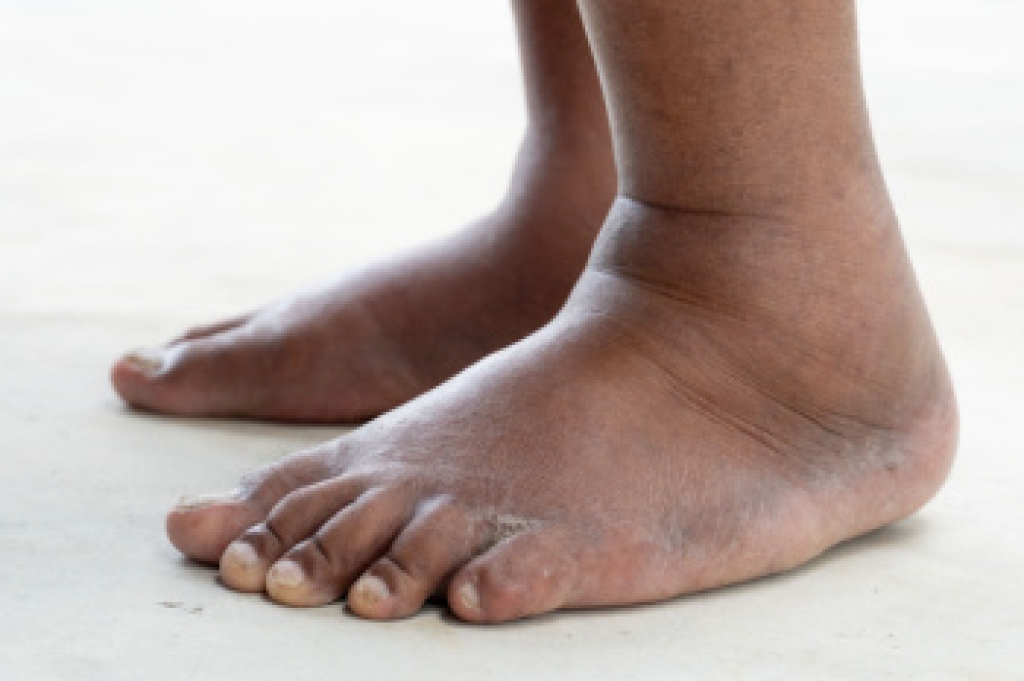
Swelling of the feet, also known as edema, occurs when fluid builds up in the tissues, causing the feet to appear puffy or enlarged. The skin may look stretched or shiny, and pressing on the area can sometimes leave an indentation. Patients often describe a heavy or tight feeling, and shoes may suddenly feel too snug. Swelling often develops after long periods of standing or sitting. However, it may also be linked to circulation issues, injury, pregnancy, or underlying medical conditions. A podiatrist can evaluate the pattern and severity of swelling through a physical exam and may coordinate care if a broader medical cause is suspected. Treatment focuses on improving circulation and reducing fluid buildup with supportive footwear, compression, and targeted exercises. Early attention can help prevent discomfort and complications. If you notice swelling of the feet, it is suggested that you make an appointment with a podiatrist.
Swollen feet can be a sign of an underlying condition. If you have any concerns, contact Vincent, Vess of Fourth River Foot & Ankle. Our doctor can provide the care you need to keep you pain-free and on your feet.
Swollen feet are a common ailment among pregnant women and people who stand or sit for extended periods. Aging may increase the possibility of swollen feet and patients who are obese often notice when their feet are swelling too. There may be medical reasons why swollen feet occur:
- Phlebitis - A condition that causes the veins to become inflamed and can also cause leg pain.
- Liver disease - This may lead to low blood levels of albumin which is a protein. This can cause fluid in the blood to pass into the tissues and several areas of the body can become swollen.
- Heart failure - When the heart doesn’t pump properly the blood that is normally pumped back to the heart can pool in the veins of the legs causing swollen feet.
- Kidney disease - One of the main functions of the kidneys is releasing excess fluid in the body. This type of condition can make it difficult for the kidneys to function properly, and as a result the feet may become swollen.
- Deep-vein thrombosis (DVT)- This is a serious condition where blood clots form in the veins of the legs. They can block the return of blood from the legs to the heart which may cause the feet to swell. It is important to be treated by a podiatrist if this condition is present.
Swollen feet can also be caused by bone and tendon conditions, including fractures, arthritis, and tendinitis. Additionally, there may be skin and toenail conditions and an infection may cause the feet to swell. Patients who take medicine to treat high blood pressure may be prone to getting swollen feet.
Many patients elevate their feet to help relieve the swelling and this is generally a temporary remedy. When a podiatrist is consulted the reason behind the swelling can be uncovered and subsequently treated.
If you have any questions please contact our offices located in Pittsburgh, White Oak, and McKeesport,PA . We offer the newest diagnostic and treatment technologies for all your foot and ankle needs.
