


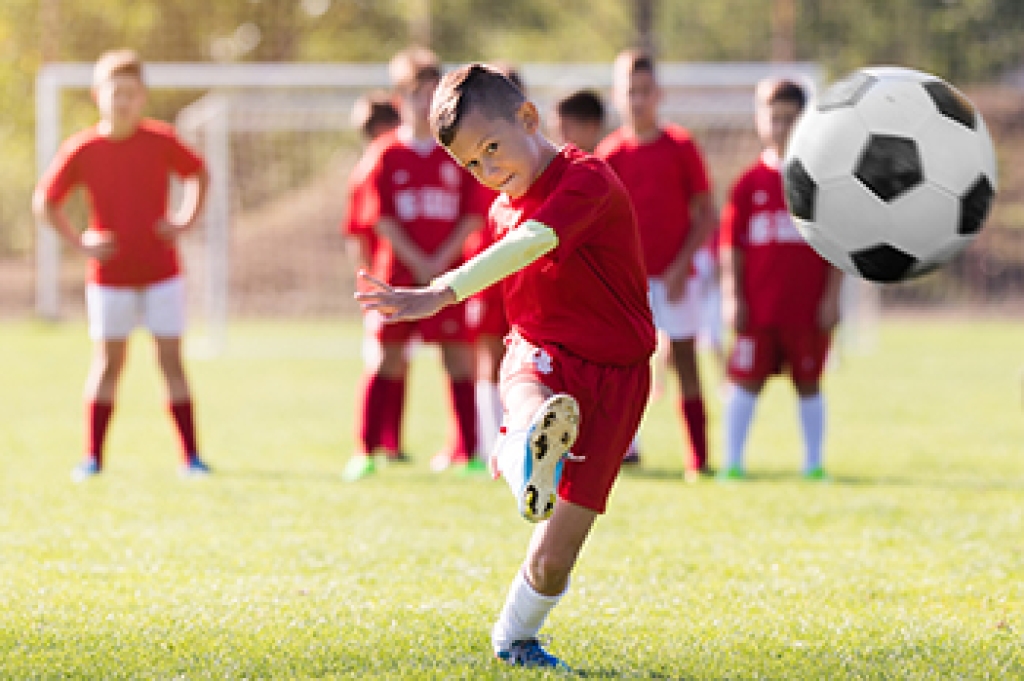
Soccer places heavy demands on growing feet and ankles. Sudden stops, quick turns, and contact with other players create opportunities for injury. Repeated running also puts pressure on bones and tendons before young athletes finish growing. When the school soccer season begins, increased practice schedules sometimes expose problems that were less noticeable during a break. Parents and coaches should take complaints of foot or ankle pain seriously. A child who limps or struggles to wear cleats needs an evaluation. Playing through pain risks worsening an injury and extending the time away from the field.
Ankle sprains occur when the strong bands that connect bones stretch or tear. A planted foot that twists during a change in direction puts these tissues at risk. Pain, swelling, and bruising frequently follow. However, a broken ankle sometimes causes similar symptoms, so appearance alone does not reveal the injury. Collisions or kicks also cause broken toes and fractures elsewhere in the foot. A podiatrist examines the painful area and checks joint stability. X-rays help identify broken bones and assess their position. Severe pain or an inability to bear weight requires prompt medical attention. An obvious deformity or open wound requires emergency care.
Other soccer injuries develop gradually from repeated stress. Stress fractures are small cracks in a bone that cause pain with activity and tenderness in a specific spot. Early X-rays sometimes fail to show these injuries, so a podiatrist might order additional imaging tests. Growing children also experience irritation where the Achilles tendon attaches near the heel's growth plate, an area of developing bone. This problem causes heel pain that worsens with running. Achilles tendinitis affects the tendon attaching the calf muscles to the heel. An examination helps distinguish among these problems and guides treatment that matches the child's age and diagnosis.
A podiatrist develops a treatment plan based on the injury's severity and the demands of soccer. A protective boot or cast limits movement while damaged structures heal. Certain displaced fractures or severe injuries require surgery to restore alignment or stability. In some cases, custom orthotics may be prescribed to redistribute pressure and improve support inside sports shoes. The podiatrist will evaluate cleat fit and identify movement patterns that contribute to repeated strain. Follow-up visits track healing and help determine when a gradual return to soccer is appropriate. Clearance depends on recovery, rather than the team's schedule. If your child has sustained foot or ankle injury from playing soccer, it is suggested that you schedule an appointment with a podiatrist for effective treatment solutions, allowing for a prompt return to play.
Ankle and foot injuries are common among athletes and in many sports. They can be caused by several problems and may be potentially serious. If you are feeling pain or think you were injured in a sporting event or when exercising, consult with Vincent, Vess from Fourth River Foot & Ankle. Our doctor will assess your condition and provide you with quality foot and ankle treatment.
Common Injuries
The most common injuries that occur in sporting activities include:
- Achilles Tendonitis
- Achilles Tendon Rupture
- Ankle Sprains
- Broken Foot
- Plantar Fasciitis
- Stress Fractures
- Turf Toe
Symptoms
Symptoms vary depending upon the injury and in some cases, there may be no symptoms at all. However, in most cases, some form of symptom is experienced. Pain, aching, burning, bruising, tenderness, tightness or stiffness, sensation loss, difficulty moving, and swelling are the most common symptoms.
Treatment
Just as symptoms vary depending upon the injury, so do treatment options. A common treatment method is known as the RICE method. This method involves rest, applying ice, compression and elevating the afflicted foot or ankle. If the injury appears to be more serious, surgery might be required, such as arthroscopic or reconstructive surgery. Lastly, rehabilitation or therapy might be needed to gain full functionality in the afflicted area. Any discomfort experienced by an athlete must be evaluated by a licensed, reputable medical professional.
If you have any questions please contact our offices located in Pittsburgh, White Oak, and McKeesport,PA . We offer the newest diagnostic and treatment technologies for all your foot and ankle needs.
