


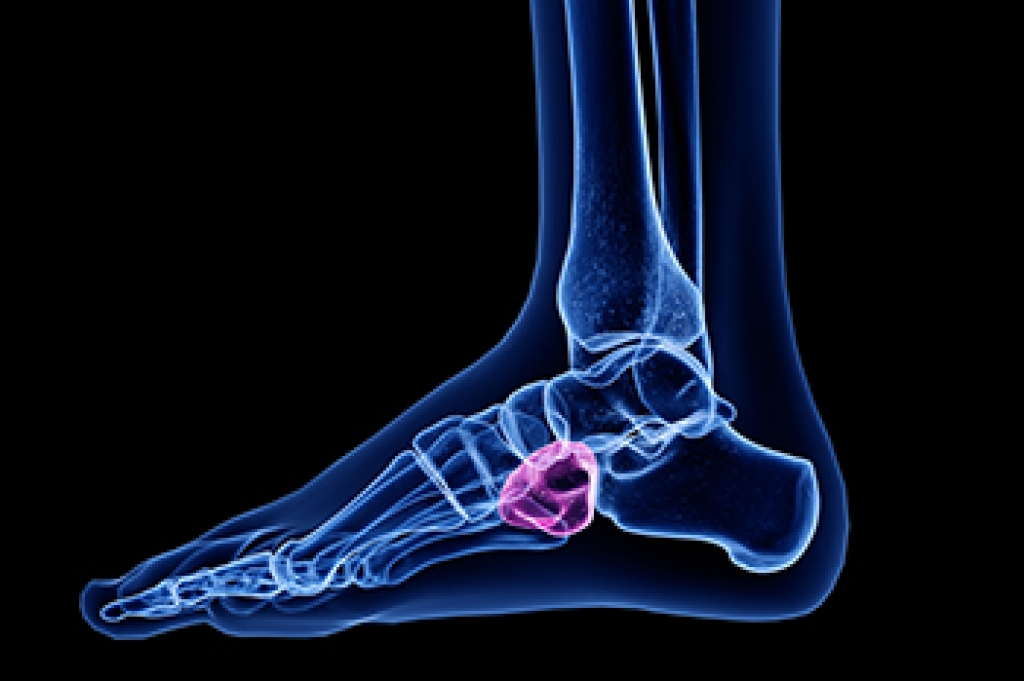
Cuboid stress fractures are uncommon but painful injuries that affect a small bone on the outer side of the midfoot. They often develop from repetitive loading rather than a single injury, making them easy to overlook early on. Runners, dancers, and people who walk long distances may notice a deep, aching discomfort that worsens with activity and improves with rest. Swelling, tenderness, and pain when pushing off the foot are common signs. Because symptoms can mimic tendon strain or arthritis, proper diagnosis is sometimes delayed. Imaging such as X rays or advanced scans may be needed to confirm the problem. Treatment usually focuses on reducing stress to the bone through activity modification, supportive footwear, and sometimes immobilization. With proper care, healing follows. It is suggested that anyone with persistent outer foot pain consider seeing a podiatrist for an accurate diagnosis and a treatment plan.
Cuboid syndrome, also known as cuboid subluxation, occurs when the joints and ligaments near the cuboid bone in the foot become torn. If you have cuboid syndrome, consult with Vincent, Vess from Fourth River Foot & Ankle. Our doctor will assess your condition and provide you with quality foot and ankle treatment.
Cuboid syndrome is a common cause of lateral foot pain, which is pain on the outside of the foot. The condition may happen suddenly due to an ankle sprain, or it may develop slowly overtime from repetitive tension through the bone and surrounding structures.
Causes
The most common causes of cuboid syndrome include:
- Injury – The most common cause of this ailment is an ankle sprain.
- Repetitive Strain – Tension placed through the peroneus longus muscle from repetitive activities such as jumping and running may cause excessive traction on the bone causing it to sublux.
- Altered Foot Biomechanics – Most people suffering from cuboid subluxation have flat feet.
Symptoms
A common symptom of cuboid syndrome is pain along the outside of the foot which can be felt in the ankle and toes. This pain may create walking difficulties and may cause those with the condition to walk with a limp.
Diagnosis
Diagnosis of cuboid syndrome is often difficult, and it is often misdiagnosed. X-rays, MRIs and CT scans often fail to properly show the cuboid subluxation. Although there isn’t a specific test used to diagnose cuboid syndrome, your podiatrist will usually check if pain is felt while pressing firmly on the cuboid bone of your foot.
Treatment
Just as the range of causes varies widely, so do treatments. Some more common treatments are ice therapy, rest, exercise, taping, and orthotics.
If you have any questions, please feel free to contact our offices located in Pittsburgh, White Oak, and McKeesport,PA . We offer the newest diagnostic and treatment technologies for all your foot care needs.
